


Thank you to the Asia Pacific Foundation of Canada for the opportunity to contribute to the Track 1.5 Dialogue on Defence Industrial Cooperation held in Delhi earlier this month.
EXECUTIVE SUMMARY
All eyes are on the Strait of Hormuz and the war with Iran as the US rips through years worth of weapons stockpiles in weeks without the ability to rapidly replace them. Recent discussions of repositioning missile defence assets from South Korea to the Middle East has been met with trepidation. The Indo-Pacific implications of the Iranian conflict are still emerging and the balance of power in the Indo-Pacific is being shaped by the wars in Ukraine and the Gulf. These conflicts are also exposing the hard limits of magazine depth, production capacity, force availability and policy attention. Against this backdrop Beijing is increasing its defence budget, expanding industrial output combined with a broader state-led push to fuse civilian and military innovation. In the midst of this great power competition, there are opportunities for Canada as countries in the region seek to diversify their supply base and partnerships as gaps emerge in the US’ approach to the region. Canada continues rolling out DIS announcements including ~$900M for an NRC drone centre of excellence, but it’s unclear how Canada will manage and avoid hostile supply chains for key components (batteries, electronics etc) . PM Carney wraps his Indo-Pacific tour and Japan operationalizes its counterstrike strategy while signalling intent to join Golden Dome. India sends mixed signals with a $236M Russian Shtil-1 deal days after Carney’s visit. Australia becomes the first nation after the US to produce GMLRS for HIMARS and Singapore keeps a keen eye on lessons from the Strait of Hormuz as Gulf tensions put energy security in focus.
SUMMARY OF WHAT TO WATCH
Immediate (Next 30 Days)
• US-Iran conflict and Indo-Pacific spillover: Washington is burning through precision munitions and has repositioned missile defence out of South Korea. Watch for tests of US force posture and when the Trump/Xi meeting occurs
• Japan Golden Dome request and missile deployments: Tokyo expected to formally request Golden Dome participation March 19. HVGP and Type-12 deploy March 31. Watch whether Canada comments or publicly supports.
• Taiwan arms deadlines: HIMARS LOA expires March 26. The broader special budget remains politically stuck as Washington balances Taiwan procurement against Trump-Xi summit dynamics.
Medium-Term (2026)
• Defence Industrial Strategy: follow-through in the Indo-Pacific: Will the drone centre of excellence secure reliable non-hostile supply chains for critical components? Will Indo-Pacific firms from Japan, South Korea, and Australia make the Partner tier, or does Europe dominate?
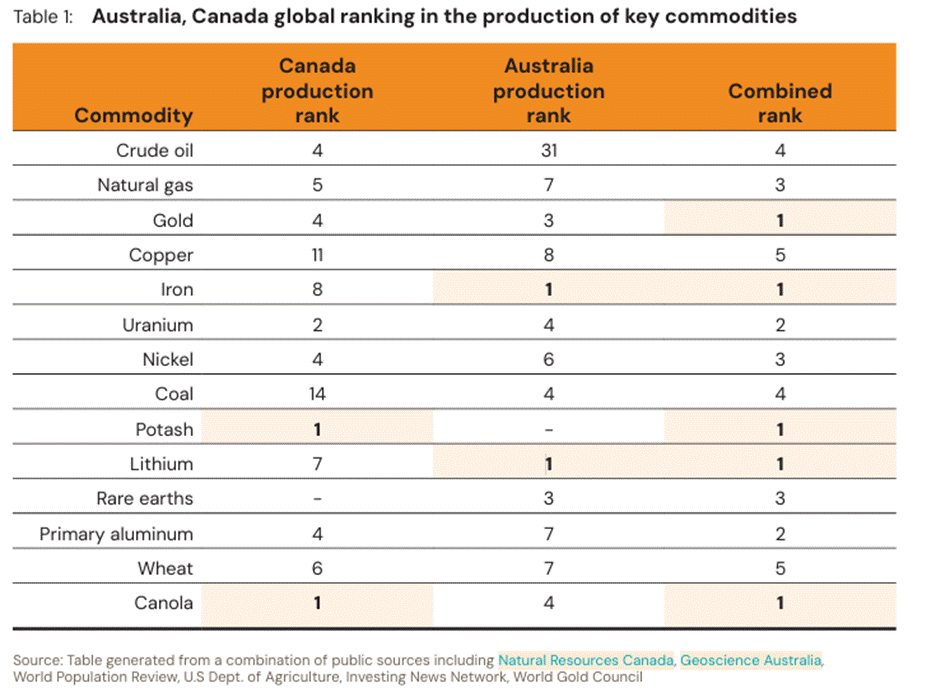
• Canada-Australia resources & critical minerals: Combined, the two countries would rank top five in almost every major commodity. Saskatchewan’s rare earth processing is an underappreciated asset. Watch whether momentum translates into joint processing, stockpiling, and direct outreach to OEMs and suppliers
Strategic (2026+)
• Allied production capacity as a structural constraint: The Iran and Ukraine conflicts demonstrate the Western alliance cannot sustain high-intensity operations for a meaningful duration. Countries that produce munitions and critical components at scale will be structurally advantaged, however, there is a cost to maintaining capacity.
• Middle-power coherence: The Defence Industrial Strategy, Japan ETTA, Korea 2+2, Australia minerals alignment, are pieces of a variable-geometry architecture. Can Ottawa weave them into a coherent Indo-Pacific posture or do they remain a collection of bilateral announcements?
CANADA: Announcements continue to roll out, PM wraps Indo-Pacific tour and critical minerals take center stage
• Major Announcements Continue: Several big announcements this week on the heels of the Defence Industrial Strategy including PM Carney’s announcement to defend, build and transform the North; announcement of ~$900M for the creation of a drone center of excellence at the National Research Council while a new industry association is launched called the Alliance of Canadian Defence Companies (ACDC) (Feb announcement) aims to shape procurement reform. Ontario announced the appointment of a Bernie Derible as Defence Representative in the Indo-Pacific to secure investment and position Ontario as a trusted supplier of defence equipment and technology. EDC highlights growing defence presence.
• PM Wraps Indo-Pacific Tour: Carney used his India, Japan, and Australia trip to advance defence, critical minerals, technology, and supply-chain resilience initiatives. Canada expresses interest in Indian Ocean Rim Association as India sees benefits for cooperation on Maritime Domain Awareness initiatives.
• Resource & Critical Mineral Cooperation Opportunities: According to recent report from PerthUS Asia Center on Canada Australia cooperation co-authored by Heather Exener-Pirot, Andrew Pickford and Wolfgang Alschner, if Australia and Canada combined forces, they would “would rank in the top 5 of almost every major commodity.” Given Canada’s endowments and the rare earth processing facility in Saskatchewan, will we seize the moment? It looks like it with new agreements signed, and a clear case for engagement with OEMs that need reliable sources of supply. See table below.
Watch: Will Canada’s drone center of excellence look to build capacity at home, partner and secure reliable sources of supply for critical components (electronics, batteries etc) and encourage Canadian firms to avoid hostile supply chains as it builds capability? How will Canada focus its attention in the Indo-Pacific with the growing myriad of engagements and commitments? There is a lot of energy and momentum, but will there be follow through?
JAPAN Export reorientation continues, Golden Dome and missile deployments emerge
• Japan’s export reorientation continues: Japan pivots to dual-use technology as the foundation of a new defence industrial strategy.
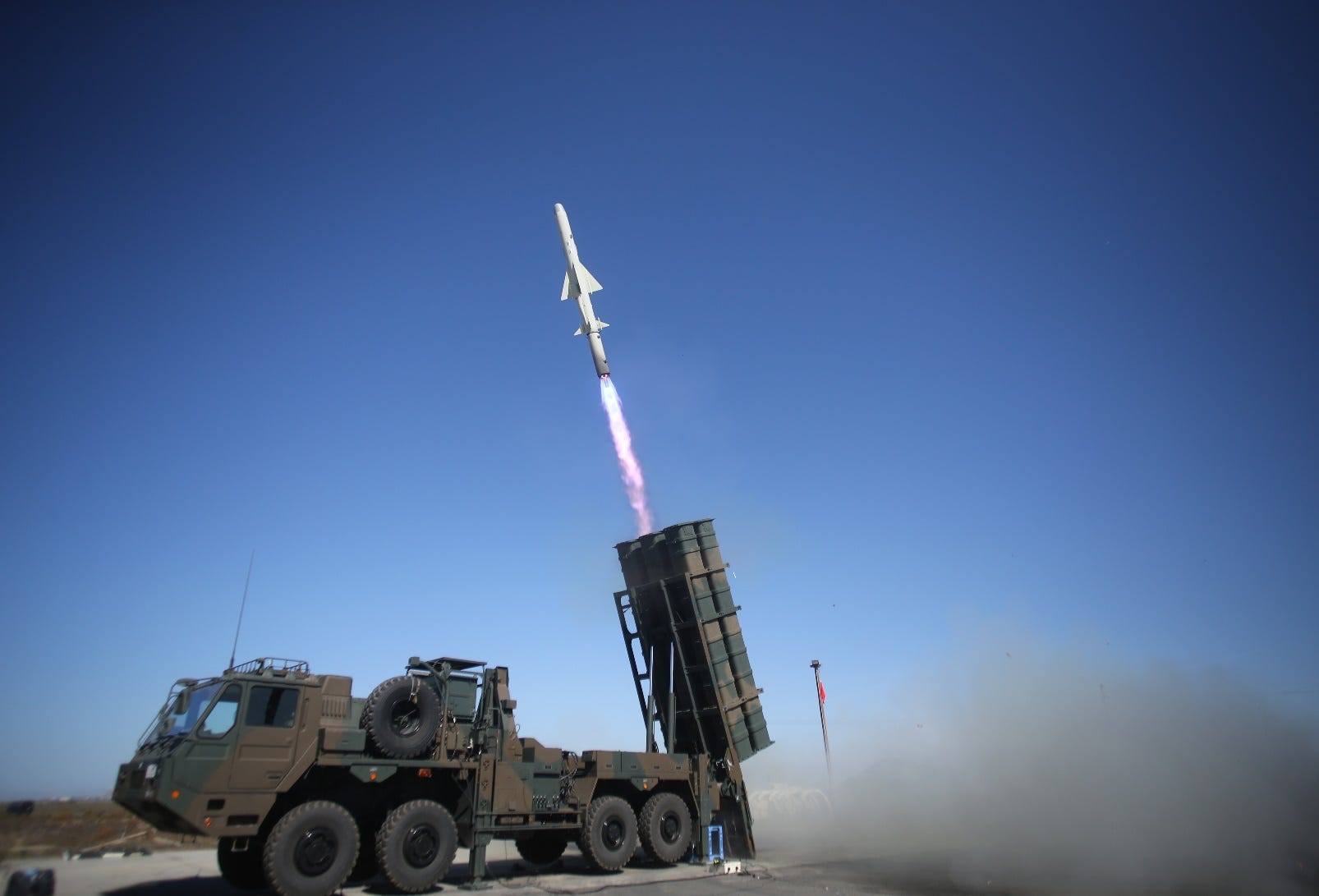
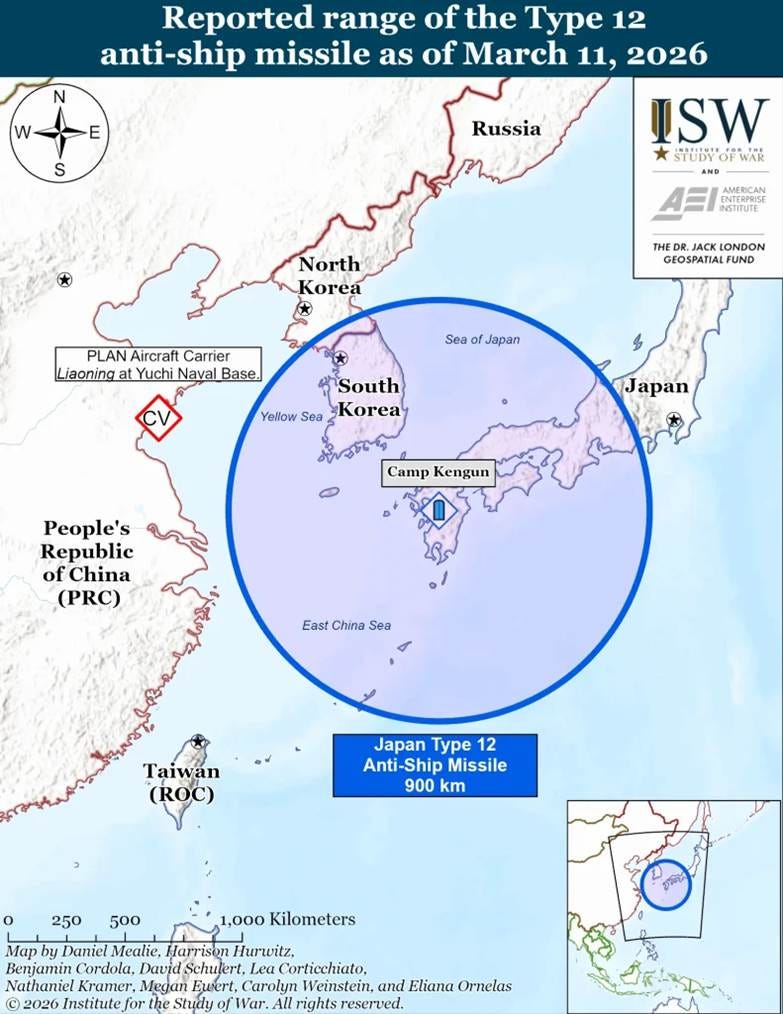
• Golden Dome, Counter Strike Strategy & Preparing for Missile Deployments: Counterstrike Strategy: Japan is seeking to join Trump’s Golden Dome missile defence project and is expected to formally make the request on 19 March amidst reports of Japan’s Type-12 surface to ship upgraded long range (1000KM range) missile developed by MHI advancing deployment timelines amid China tensions amid news that Japan will also be deploying a Hyper Velocity Gliding Projectile Capability by 31 March of this year.
Watch: How will Trump react to the Golden Dome request? Will Canada comment or publicly support the Japanese request?
INDIA Draft acquisition policy takes shape, PMs advance cooperation on defence
• Draft Acquisition Policy: Analysts are starting to digest the new Defence Acquisition Policy (released in Feb). Notable changes in the draft include a transition from “Make in India” to “Owned by India” and eased FDI pathways. The draft was released February 10 with a feedback deadline of March 3; final policy is expected April 1. However, the market remains challenging and complex for many foreign suppliers, highlighting the need for securing the right partnerships for market entry (both Israel and France have had tremendous success in the market over the years despite these challenges potentially offering different playbooks to follow).
• Defence Industrial Cooperation Opportunities: PM Carney’s recent visit and ambitious program for cooperation starts to take shape, however mixed signals and market complexity are likely to slow down practical cooperation. For example, on March 3, the day after Carney departed, India signed a $236M deal for Russian Shtil-1 missiles, though the procurement had been in negotiation since the DAC approved it in March 2025. Analysts note the Shtil-1 complements rather than replaces the Barak-8, covering smaller vessels at lower cost. The prevalence of Russian equipment in India’s inventory is generally declining, but still plays a central role.
Watch: what’s the follow through after the PM’s visit? Will there be an announcement for a General Security of Information Agreement? What role will the Australia, Canada and India Technology and Innovation Partnership play in all this, if any?
AUSTRALIA: Canada gains traction in Canberra, defence industrial momentum builds and AUKUS implementation advances
• PM Carney Addresses Parliament: Carney used his address to both Houses of Australia’s Parliament to frame Canada as a serious Indo-Pacific partner, emphasizing defence, economic security, critical minerals, trusted supply chains, and deeper strategic cooperation with Australia. Commentary and analysis this week suggest Canada is beginning to register more clearly with Australian policymakers as a useful partner in reducing strategic risk, particularly in critical minerals, defence industrial resilience, and broader Indo-Pacific burden-sharing.
• Australia’s Defence Industrial Base Continues to Move: Australia is accelerating the use of uncrewed surface vessels for maritime surveillance and operations, while also becoming the first country after the United States to produce GMLRS missiles for HIMARS, marking another step forward in sovereign munitions production.
• AUKUS Advances Despite Pillar II Friction: Even as analysts continue to warn that export controls, ITAR, and governance issues are slowing progress on Pillar II, implementation on pillar I is moving ahead, highlighted by the first-ever UK submarine maintenance period in Australia under AUKUS at HMAS Stirling.
Watch: Whether Canberra and Ottawa can translate growing strategic alignment into practical cooperation on munitions, critical minerals, defence technology, and supply-chain integration — and whether AUKUS Pillar II can overcome persistent policy and export-control bottlenecks.
TAIWAN: Budget impasse partially eased, stalled US arms LOAs move forward and special defence package remains contested
• Parliament Partially Breaks Deadlock: Taiwan’s parliament approved a major US arms deal and authorized the government to sign four previously stalled US letters of offer and acceptance before the March 15/26 deadlines. However, the broader NT$1.25 trillion special defence budget remains politically contested, with disputes continuing over scope, sequencing, and the opposition’s counter-proposals even as pressure mounts to accelerate procurement
• Unusual Pause in PLA Aircraft Activity: Chinese military flights around Taiwan ceased for nearly two weeks in an unusual break from Beijing’s routine pressure campaign, fuelling speculation about a tactical recalibration even as PLA naval activity continued
Watch: What are the implications of US strategic attention being on Iran? What will crop up? What are the implications of President Trump pushing off his meeting with President Xi Jingping by a month?
OTHER REGIONAL DEVELOPMENTS
South Korea: Seoul advances strategic investment push. South Korea’s parliament passed a US$350 billion Special Investment Act on March 12 (226 votes in favour), establishing a state-run investment corporation. While broader than defence alone, the scale and sectoral focus make it relevant to allied industrial capacity, shipbuilding, supply chains, and strategic economic security.
Thailand: Cobra Gold highlights space and cyber cooperation. Cobra Gold 2026 has wrapped, with reporting emphasizing the growing role of space and cyber cooperation within major Indo-Pacific exercises. The trend points to a broader regional shift toward integrating digital, cyber, and space-enabled capabilities into alliance and partner defence planning.
Philippines: Manila and Seoul deepen defence industrial cooperation. The Philippines and South Korea pledged closer cooperation on geopolitics, infrastructure, artificial intelligence, shipbuilding, and defence industries, giving Manila another avenue to diversify defence partnerships and strengthen industrial ties with a major regional supplier. The Asia Pacific Foundation of Canada hosted a Track 1.5 dialogue on Economic Security.
Indonesia: BrahMos purchase marks major defence export deal. Indonesia has confirmed that it has finalized its BrahMos missile purchase from India,(Brahmos is based on the Russian P-800 Oniks) marking a significant Indo-Indian defence export breakthrough and reinforcing Southeast Asia’s role as a growing market for high-end missile and strike capabilities.
Singapore: Strait of Hormuz risks put energy security in focus. Singapore is watching the Strait of Hormuz closely as Gulf tensions drive up energy prices and raise concern over business costs and fuel security. Current US operations in Iran are a reminder that maritime chokepoints, shipping disruption, and energy vulnerability remain core strategic issues. Export Development Canada and Plenary Pacific signed an MOU. While not a central focus, Plenary does appear to have a history of investment in defence infrastructure. Was defence addressed in the MOU?
Events:
APF Canada Track 1.5 India-Canada Dialogue | 5 March 2026 | New Delhi |
Asia Pacific Maritime (APM) 2026 | 25-27 March 2026 | Singapore (Marina Bay Sands) |
CADSI Canadian Armed Forces (CAF) Outlooks 2026 | 7-9 April 2026 | Ottawa |
DSA and NATSEC Asia 2026 | 20-23 April 2026 | Kuala Lumpur |
Singapore Maritime Week (SMW) 2026 | 20-24 April 2026 | Singapore |
The New Maritime Battlespace: Threats, Technology, and the Future of Canadian Naval Operations | Royal United Services Institute of New Brunswick | 5 May | St. John New Brunswick Canada
AUSA LANPAC Symposium & Exposition 2026 | 12-14 May 2026 | Honolulu |
Indian Ocean Defence & Security (IODS) 2026 | 26-28 May 2026 | Perth |
CANSEC 2026 | 27-28 May 2026 | Ottawa (EY Centre) |
Shangri-La Dialogue (IISS Asia Security Summit) | 29-31 May 2026 | Singapore |
Critical Minerals for Defence | Toronto 9-10 June | Toronto
Naval Defense Philippines / PhilMarine 2026 | 17-19 June 2026 | Manila (SMX Convention Center) |
SANS Cyber Defence Singapore 2026 | Starts 29 June 2026 | Singapore |
Canadian Industrial Base Atlas
Over the last several months we’ve been developing an analytical base of Canadian defence and dual use firms supporting key sovereign capability areas, what domains and market segments they address, employees, key export markets and more. If you’re interested in learning more or collaborating on this effort, get in touch.
Accelerated Procurement, Grants & Diversification Opportunity Tracker
Becoming the Export and Partnership Radar…