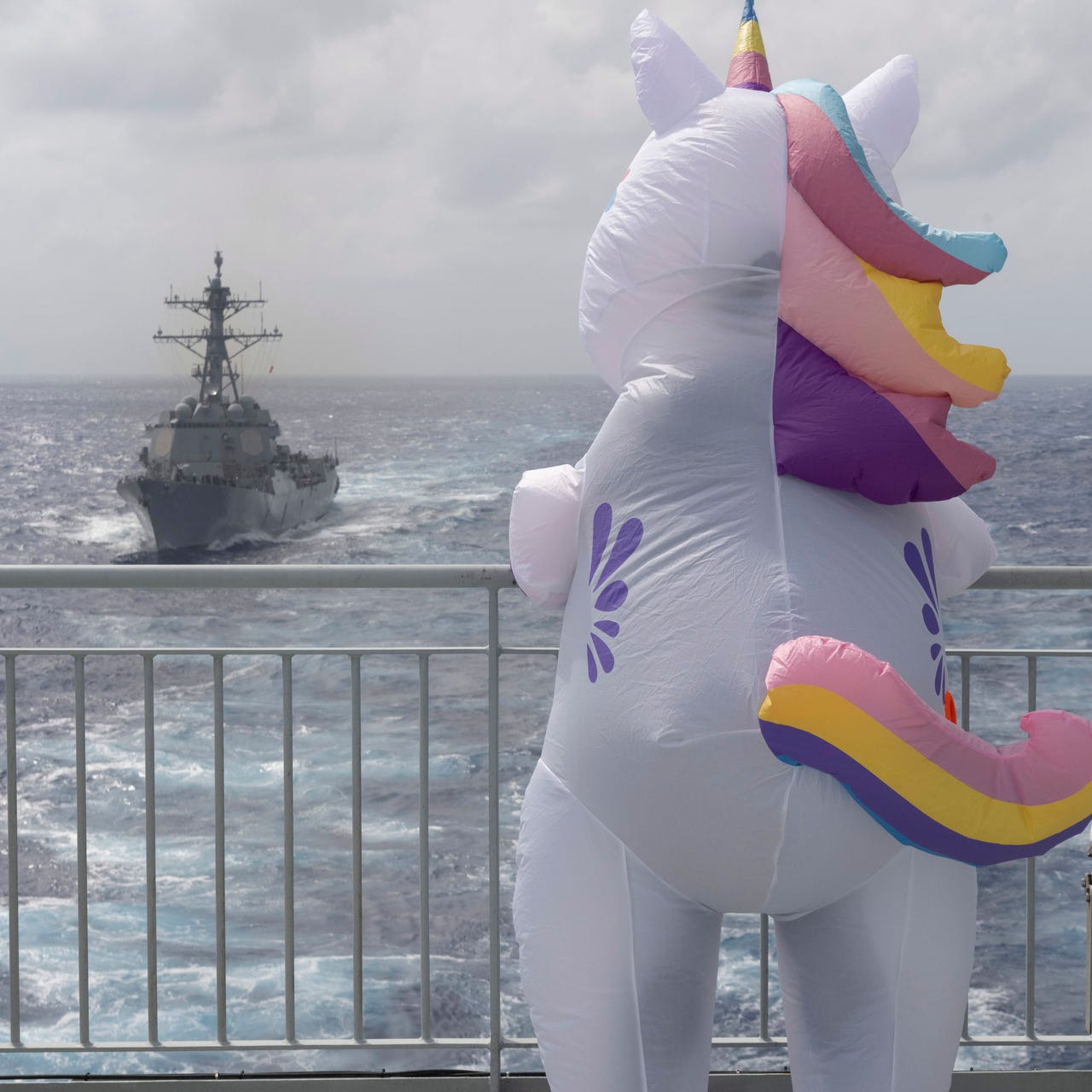
This edition was slightly delayed due to travel back to Canada at the end of October…
Canada – Budget Release, Indo-Pacific Engagement & Trade Diversification
What Happened:
The Carney government tabled Budget 2025 on November 4, marking the largest defence investment in decades with $81.8B committed over five years.
PM Carney also travelled to the Indo-Pacific, including a stop in Singapore where he reiterated that Canada should target doubling our non-US exports over the next ten years. He also stopped at Hanwha Ocean’s shipyard where Hanwha’s savvy PR people made sure they got this photo:
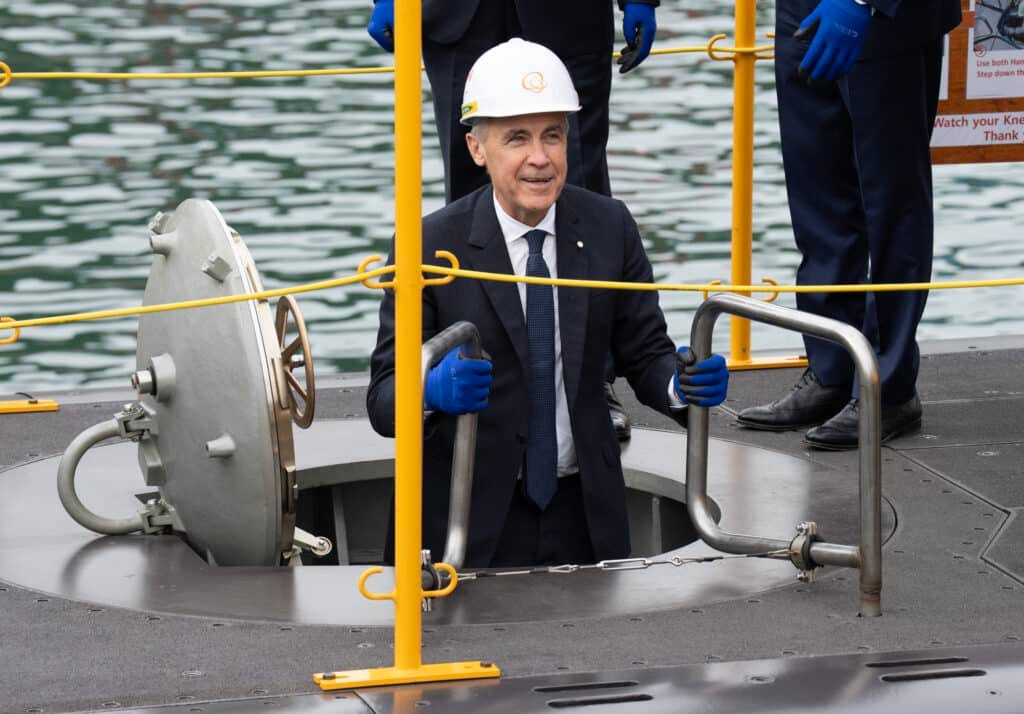
For a full assessment of what the PM and the Government of Canada accomplished in the region, I recommend you check out this assessment by the Asia Pacific Foundation’s Vina Nadjibulla.
In other news, the Defence Investment Agency was also formally launched on 2 October and the CANEXPORT Program received a substantial injection of additional cash. For those of you contemplating diversifying your export markets, the program is worth a look as it covers 50% of your costs for new market entry.
Watch For:
Hanwha has significant partnerships in Canada, including Babcock Canada, CAE, Gastops, L3Harris Canada, ModestTree and PCL Construction. In Korea, procurement and partnership models often emphasise scale and track record, which can favour larger incumbents. Canadians tend to design in SME participation. Watch whether Hanwha increases its efforts to establish partnerships with more smaller players in Canada.
The Defence Investment Agency promises faster capability delivery, closer partnerships, and potential joint acquisitions with the UK, Australia, and France. Will this be extended to partners in the Indo-Pacific?
What you should do:
If you’re a Canadian SME, you should be knocking directly on Hanwha’s door conveying the importance of SMEs in Canada for successful programs (not just from a economic but technical perspective too!)
If you’re an exporter looking to take advantage of the CANEXPORT Program, start preparing now as proposals are likely to be evaluated on a first come first served basis and funding goes fast. We anticipate that applications will open in the new Year.
South Korea – Increased Spending, Formalised Industrial Cooperation
What happened?
In late October, Canada and South Korea formalized the Security and Cooperation Partnership, including a defence industrial cooperation section covering co-development, reduced trade barriers, and an industry forum. This is a smart move given that Seoul’s President recently announced ambitions to become the #4 global defence exporter. Despite this momentum, only a few Canadian firms appear to have exhibited independent of the Canada Pavilion at the ADEX defence trade show in Seoul which wrapped a few weeks ago, including Amphenol, Battlefield International, and OPTIMA. I hope the Canada Pavilion was stacked!
Watch For:
First meeting of the Canada Korea defence industry forum, who will be invited, what are the topics?
Any pilot co development efforts or export control streamlining.
Korean OEMs supply chain expansions post ADEX and how they source Canadian content in sensors, software, MRO, composites.
What you should do:
Prioritise partnerships with Hanwha, LIG Nex1, KAI, and HHI, with workshare narratives tied to Canadian strengths; if Canadian firms can get into the South Korean supply chain as their global efforts ramp up, the South Korean export strategy could offer a slingshot into more global markets for Canadian firms
Australia – AUKUS Away, Maritime Domain Awareness, and Regional Engagement
In late October, Trump gave his go ahead for AUKUS while expressing frustration around the slow implementation pace. While Pillar 1 goes ahead, it’s unclear if that’s also a go-ahead for Pillar 2 Advanced Capabilities (Quantum, Undersea Capabilities, Innovation, Information Sharing, for full list see here.) This is consequential for Canada, and others in the region including Japan and South Korea, who view Pillar 2 as a means to contribute to the pact without acquiring nuclear subs. However, not much has happened since the Trump Administration announced its review of the pact.
Australia participated in Exercise Suman Warrior 2025 with about 35 personnel under the Five Power Defence Arrangements, focusing on humanitarian aid and disaster relief, took delivery of its 13th P-8A and reactivated 12 Squadron at RAAF Edinburgh, signaling a sustained maritime surveillance focus. A recent incident in the South China Sea where a PLA aircraft released flares near an Australian surveillance aircraft raises issues of escalation caused by mistakes and unprofessional practices.
The Indo-Pacific International Maritime Exhibition in Sydney on 4 to 6 November, wrapped with Canadian representation from Kraken Robotics, MetOcean Telematics, Bronswerk Marine and others.
Watch For:
AUKUS implementation pace and Pillar 2 reactivation. Will it speed up and will Pillar 2 be part of that?
Australian capacity to implement on AUKUS commitments and whether workforce shortages arise.
Post Indo-Pacific show memorandums of understanding and pilot trials announced by Australian state agencies and primes.
What You Should Do:
If you’re a Canadian Policy maker, sharing any insights on the state of Pillar 2 would go a long way for industry. Are there other likeminded regional partners we could engage with to advance progress on Pillar 2?
Given Australian capacity constraints, particularly workforce shortages, might there be areas to make common cause?
Japan - Accelerated Spending and More to Come?
What Happened:
Japan’s new Prime Minister Sanae Takaichi confirmed a push to hit 2 percent of GDP in FY2025, two years ahead of the 2027 target, with potential further increases. This comes amid continuing concerns about East China Sea activity, per the Japanese Defence Minister and the recent visit from President Trump.
What to Watch:
FY2025 budget execution for munitions, air and missile defence, ISR, cyber, and industrial policy for co development.
What You Should Do:
Frame proposals around interoperability with U.S. systems and export-control compliance, including pathways that support surface combatants and GCAP-adjacent capabilities
Singapore - The Most Densely Defended Country on the Planet
What Happened?
Besides the Canadian PM Visiting, Singapore launched its largest and most complex warship, the Multi Role Combat Vessel, a modular mothership for unmanned systems designed to ensure security of Sea Lines of Communication.
What To Watch:
MRCV unmanned teaming trials and command and control integration. Procurement pathways for payloads, autonomy, and counter UxS.
What You Should Do:
There may be opportunities to explore to offer specialized or differentiated mission packages for USV and UUV including sensors, autonomy stacks, and secure communications.
Philippines - Status of Forces Agreement
What Happened:
Canada deepened defence ties with the Philippines by signing an agreement permitting troop exchanges and training on each other’s soil. This is Canada’s first Status of Visiting Forces Agreement in the Region. This reflects a broader shift toward prioritizing Indo-Pacific engagement.
Canada isn’t the only one being courted by the South Koreans, with reports emering that South Korea also offered KSS III option for the Philippines. Given the price tag, and unless South Korea is willing to heavily subsidize the sale, it seems an unlikely outcome.
What to Watch:
What are the practical implications for the SOVFA? Will there be greater Canadian training and capacity building activities? In what areas?
What priorities will emerge for maritime patrol and coastal defence procurements?
What To Do:
Position Canadian maritime and training solutions for joint activities, exercises, and sustainment. Focus on capacity building and force multipliers
Indonesia - Defence Policy Pulling In Several Directions
What Happened?
Jakarta’s defence choices are pulling in several directions at once. There are reports of ordering Chinese fighter jets. There is a new cooperation pact with Canada and Indonesia also took delivery of its first A400M strategic airlifter from Airbus.
This mix underscores a deliberate but difficult hedge. Indonesia is buying combat power from China while deepening ties with Western partners and fielding European airlift for regional reach. The result is capability diversification, but also friction in interoperability, sustainment, and partnerships.
What to watch
What other fleets or capabilities might Indonesia contemplate sourcing from China?
Whether Western partners predicate deeper cooperation on interoperability considerations and industrial opportunities
A400M utilisation rates and any follow on packages such as spares, simulators, and depot work.
What to do
Cautiously explore opportunities
Coming in future editions
India, Malaysia, United States, others
Upcoming events
Defense and Security 2025, 10 to 13 November, Thailand
Singapore Airshow, 3 to 8 February, Singapore, start planning now
What did we miss? What countries or developments should we be tracking? Reply to this email or reach out directly. Also check out: