


(It was a pleasure to be in Ottawa and Toronto last month to see clients and friends. In particular, thank you to the Barrie Sandbox Centre for the opportunity to present at their Dual-Use and Defence 101 day, and to everyone who came out. The team there is doing great work helping Canadian firms navigate the defence market. Check them out here.)
EXECUTIVE SUMMARY
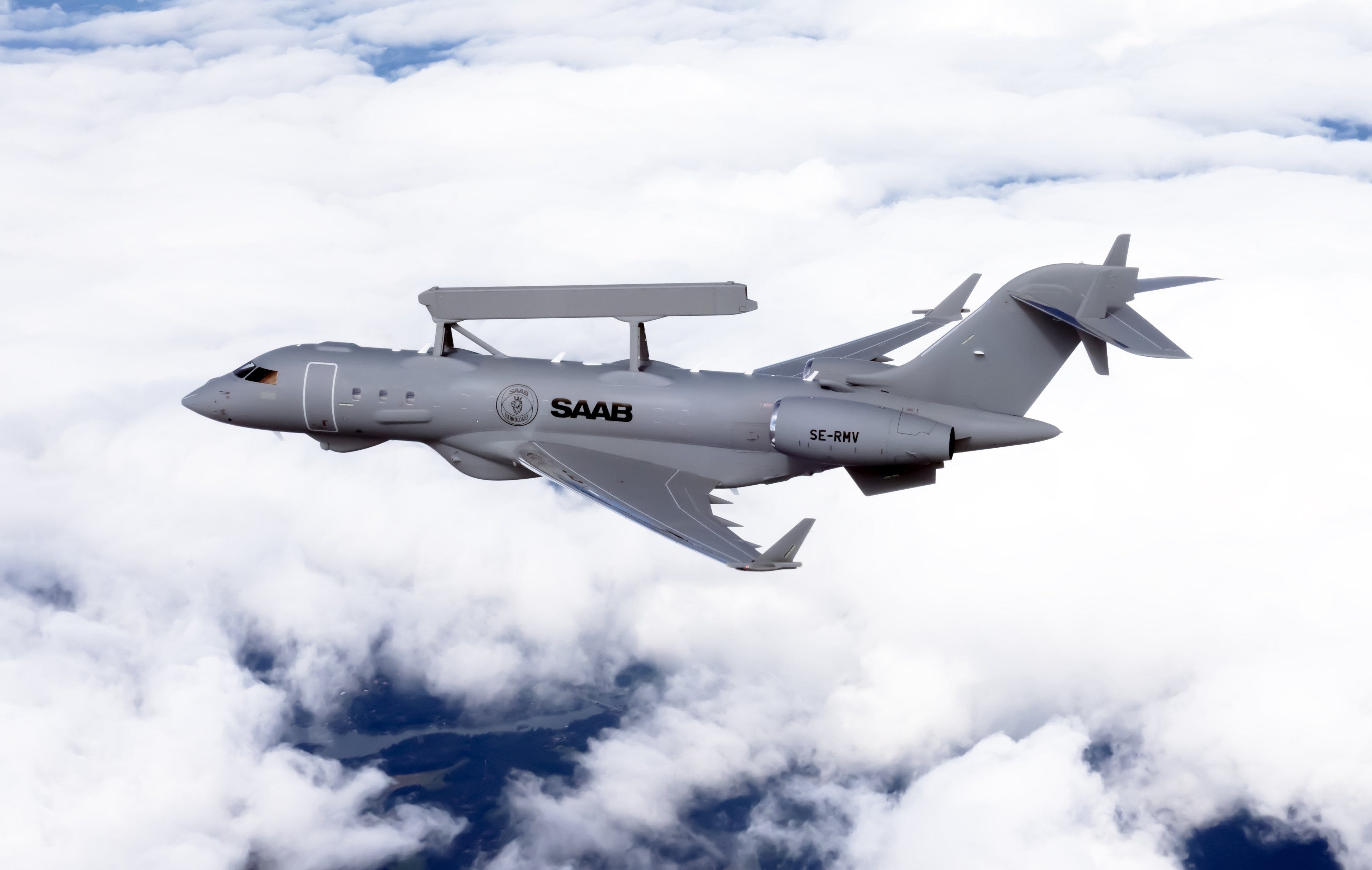
The ambition keeps getting steeper but can the system keep up? PM Carney predicted 4% of GDP on defence by 2029, Ottawa and Canberra signed the CAD 2.5-billion Arctic over-the-horizon radar deal, Australia‘s largest-ever defence export, and the GlobalEye preferred-supplier move showed Ottawa trying to sprint.
Dominion Dynamics closed a CAD 139 million Series A (30 June), the largest defence Series A in Canadian history; Kraken Robotics announced regulatory approval of its CAD 615 million Covelya Group acquisition (2 July). The firm will soon be 1,200 people strong, from Newfoundland to Australia and Singapore to Germany. BlackBerry took QNX into Malaysia’s universities in a Southeast Asian rollout. Canadian-built towed array sonars are on the Philippine Navy’s newest offshore patrol vessel (BRP Rajah Lakandula, 9 June). And NEO Battery Materials launched its Korea-made strike-drone battery line (10 June). Bombardier announced it is nearly doubling it’s footprint in Singapore earlier this month.
Canada’s naming of a preferred partner for the Canadian Patrol Submarine Project (CPSP) slipped past its end-June target, with a single winner signaled and an announcement expected at or just before NATO’s Ankara summit (7-8 July), while former officials warned the shortcut around a formal request for proposals has costs.
The much quieter story, but one with long-term impact, is the not so glorious work of paperwork and agreements: the Japan Equipment and Technology Transfer Agreement entered into force days before MDA Space won the payload for Japan’s next defence communications satellite as a Team Canada trade mission happened; South Korea and Canada launched Defence Cooperation Agreement negotiations with a critical-minerals stockpiling plan attached; the Philippines signed a Mutual Logistics Support Arrangement.
At the upcoming RIMPAC, Canada commands the multinational air component, with HMCS Corner Brook its first submarine there in 12 years.
All the while, the threat and economic-security backdrop continues to harden: China quadrupled the range of its HQ-16 air defence system in live-fire drills, a large sailless submarine appeared on satellite imagery at Jiangnan shipyard, Beijing placed 40 Japanese defence-linked entities under export-control measures, and North Korea unveiled a new uranium enrichment plant as Kim Jong Un supervised tactical weapons tests.
SUMMARY OF WHAT TO WATCH
Immediate (Next 30 Days)
The Canadian submarine announcement, if it happens before the PM departs for Europe expect a Hanwha win. If the announcement happens in Europe, expect a TKMS victory.
Rim of the Pacific through 31 July: HMCS Corner Brook’s performance, then Exercise Pitch Black in Australia (20 July-7 August).
Medium-Term (2026)
GlobalEye contract talks: does preferred-supplier speed survive the L3Harris pushback and the United States data-link question?
The Canada-Korea Defence Cooperation Agreement and the minerals stockpiling plans with Seoul and Tokyo, all due to take shape by year-end.
GCAP: does Ottawa seek observer status, join a workshare package, or stay outside?
Strategic (2026+)
Procurement machinery is changing rapidly, but the outcomes are not certain: the Defence Investment Agency and Australia’s recently announced Defence Delivery Agency will be judged on converting money into capability and industrial outcomes.
China’s economic-security escalation (entity lists, detentions, rare-earth leverage) will remain the operating environment.
CANADA: Submarine Endgame in Ankara, Four Per Cent Ambition, RIMPAC in Strength, GlobalEye at Lightning Speed
Submarine decision slips, and the venue may be the tell: Ottawa missed its end-June target to name a preferred Canadian Patrol Submarine Project (CPSP) partner. As of 30 June the Defence Investment Agency said the process was still underway; signals point to a single winner and a decision before the Prime Minister leaves for NATO’s Ankara summit (7-8 July). That timing favours a NATO ally’s boat (TKMS looks well placed). Meanwhile, former senior officials argue that bypassing a formal request-for-proposals step has cost Ottawa leverage.
Ambition accelerates: After a security call with President Trump, Prime Minister Carney said Canada could reach 4% of GDP on defence by 2029 (2.5% military, 1.5% infrastructure), ahead of NATO’s 2029 review. The rapid move to buy GlobalEye shows the new tempo: a preferred-supplier approach that blindsided L3Harris and challenges the old procurement reflexes.
RIMPAC in strength, amid a change of command: Canada entered RIMPAC 2026 (24 June-31 July) commanding the multinational air component and deploying HMCS Regina, HMCS Ottawa, a CP-140 Aurora and 800+ personnel, plus HMCS Corner Brook, its first RIMPAC submarine in 12 years. HMCS Charlottetown also joined Exercise Valiant Shield near Hawaii and Guam. This comes as Vice-Admiral Dan Charlebois took command of the Royal Canadian Navy (16 June) and warned the fleet must grow by up to 40% to crew what’s coming. Canada will also join Australia later this summer for Exercise Pitch Black 2026 (20 July-7 August) out of RAAF Bases Darwin and Tindal, with 100+ aircraft from Australia plus 19 allied and partner nations participating.
RIMPAC 2026 (CDR)
Watch: The submarine announcement and the stage it is made on. Does GlobalEye speed become the Defence Investment Agency’s template?
JAPAN: Canada Channel Goes Live, GCAP and Trade Delegations, Mineral Stockpiling
The Canada channel goes live: The Canada-Japan defence Equipment and Technology Transfer Agreement entered into force on 16 June, one week before Canada’s largest-ever defence trade mission landed in Tokyo. The anchor deliverable: Mitsubishi Electric selected MDA Space to build the payload for Japan’s next-generation defence communications satellite, with manufacturing and testing in Montreal. Big defence industrial news: a Canadian prime contractor inside a flagship Japanese military space program.
GCAP progress and an air force name change: Canada’s Defence Minister McGuinty called GCAP a promising initiative during a Team Canada trade mission to Tokyo (see Jonathan Berkshire Miller’s excellent recommendations on how Canada should approach Japan and the program) while the UK put more funding behind it. Japan’s upper house passed legislation renaming the air arm the Japan Air and Space Self-Defense Force (effective 1 April 2027), the first renaming of any service since 1954 and a codification of its expanding military space mission.
Mineral squeeze: Beijing added 20 Japanese entities to its dual-use export-control list on 29 June, including the National Institute for Defense Studies, and watch-listed 20 more. Canada and Japan are discussing joint mining projects, offtake agreements and stockpiling arrangements for graphite and gallium.
Watch: GCAP. Defence Minister McGuinty called it a “promising initiative” in Tokyo, and Canadian participation would be the program’s first expansion beyond Japan, the UK and Italy. How would Canada position with Japan as a potential partner? Can we explain why our operational requirements might be aligned and where we can offer an advantage, such as Arctic and cold-weather technologies and testing?
SOUTH KOREA: Defence Cooperation Agreement Launched, Team Korea’s Final Submarine Push, Batteries Top the Industrial Line
A new defence agreement, launched at the top: Prime Minister Carney and President Lee Jae Myung launched negotiations on a Canada-Korea Defence Cooperation Agreement at the G7 summit (16 June), covering defence science, technology and materiel. The meeting also confirmed the Canada-Korea General Security of Information Agreement is now in force, unlocking defence procurement opportunities for Canadian firms, and committed both governments to a joint critical-minerals stockpiling plan by the end of 2026.
Team Korea’s final push: Through June the Hanwha Ocean-led consortium escalated its industrial offer: roughly 75 memorandums of understanding, anchored by Hyundai Motor Group’s Project Beaver, a 3.4-4 trillion won hydrogen investment across British Columbia, Alberta and Ontario. HD Hyundai signed a research agreement with the University of British Columbia, the UK’s envoy publicly backed the bid (less odd than it sounds: the bid includes the UK’s Babcock, long a mainstay of Victoria-class support), and Seoul’s industry minister warned that geopolitics could favour Germany.
Drone batteries, submarine batteries, and Korea’s battery supply chain: Vancouver-listed NEO Battery Materials launched a Korea-made strike-drone battery line (10 June) and partnered with the Korea Anti-Drone Industry Association, building a non-Chinese battery supply chain aimed at allied militaries. Behind it, Hanwha Aerospace is preparing to export submarine lithium-ion batteries, Canada could be the first destination if Hanwha wins, with a Pyeongtaek plant riding on the bid, while the Jangbogo-N nuclear submarine program mobilizes the same supplier base Canada would buy into.
Watch: The submarine decision, which Seoul now openly frames as subject to geopolitical risk. ROKS Dosan Ahn Changho at RIMPAC after its Esquimalt visit.
AUSTRALIA: The Radar Deal in Detail, AUKUS Gets Concrete, Canberra is Rebuilding the Procurement Machine
The over-the-horizon radar deal, in detail: Australia hailed the Arctic over-the-horizon radar sale to Canada (22 June) as its largest-ever defence export and the first transfer of Jindalee Operational Radar Network technology. Ottawa’s side of the paperwork: a government-to-government acquisition arrangement, a rights agreement with BAE Systems Australia, a production contract and Canadian industrial benefits, with work starting 1 July toward initial operating capability by December 2029 and about 2,270 Canadian jobs a year. Expect site construction, jobs, sustainment work and local political attention in the communities where the radar lands, including Stayner and Barrie, Ontario.
AUKUS gets concrete: The United States Navy reactivated Submarine Squadron 3 at HMAS Stirling (12 June), standing up the command element for Submarine Rotational Force-West, while London and Canberra pledged to accelerate AUKUS Pillar Two and signed a defence critical-minerals statement at ministerial consultations in London (10 June).
Canberra rebuilds the procurement machine: Australia unveiled a sweeping procurement overhaul (2 July): a Defence Delivery Agency under a National Armaments Director by July 2027, consolidating acquisition, guided weapons and shipbuilding delivery. The parallel to Canada’s Defence Investment Agency is direct, and both will be judged the same way: does the new machinery convert money into capability faster? Does it foster a more resilient and robust defence industrial base?
Watch: What does the radar deal open next for Canada-Australia cooperation, from critical minerals to follow-on programs? The Defence Delivery Agency build as a live comparator for the Defence Investment Agency. Will they share lessons with one another?
TAIWAN: Engagement on Ottawa’s Terms, Drones, Drones, Drones
The Canada file: Canada’s representative in Taipei said Canada’s Taiwan policy is unchanged and that the bilateral investment arrangement is in the post-negotiation phase (1 July). The Canada-Taiwan Parliamentary Friendship Group announced an October delegation to Taipei despite Beijing calling the trip “hurtful to ties” (9 June).
Pressure and preparation: China’s newest aircraft carrier Fujian made its first Taiwan Strait transit a day after Taiwan opened combat-readiness drills (23 June). Opposition parties tabled rival drone procurement bills after blocking the Cabinet’s 210-billion-New-Taiwan-dollar special budget (30 June), even as the first MQ-9B SkyGuardian aircraft arrived (22 June) and Han Kuang Exercise Number 42 builds toward its main live-fire event from 5 August.
Watch: Does the October parliamentary delegation proceed? Han Kuang Number 42 in August. Can Taipei’s parties agree on drones while the People’s Liberation Army rehearses offshore?
OTHER REGIONAL DEVELOPMENTS
Canada’s Military Training Cooperation Program: Includes 37 participants from nine partner countries under Canada's Military Training and Cooperation Programme (MTCP) are attending the course, including Bangladesh, Cambodia, Fiji, Indonesia, Malaysia, Mongolia, the Philippines, Timor-Leste and host Vietnam. Five officers from Laos are also participating at the invitation of Vietnam’s Ministry of National Defence. See here.
Philippines: logistics arrangement is a sleeper story. Canada and the Philippines signed a Mutual Logistics Support Arrangement (12 June), the plumbing that lets the two militaries fuel, supply and move each other. The next steps are already scoped. Significant defence-cooperation infrastructure is being put in place here.
India: a transformative pitch. High Commissioner Chris Cooter pitched a “transformative” defence-industrial partnership with India as scheduling began for the new defence dialogue (22 June), on the heels of the Prime Minister’s March visit.
New Zealand: the frigate question sharpens. Line of Defence magazine’s tenth-anniversary issue weighs Japan’s upgraded Mogami-class against Britain’s Type 31 for the frigate replacement (26 June), a useful public read on Wellington’s choice. Washington also approved the sale of five MH-60R Seahawk anti-submarine helicopters and MK 54 torpedoes (5 June), rebuilding the naval air arm ahead of whichever hull wins.
Singapore: diversifying by design. The Defence Science and Technology Agency expanded its collaboration with France’s Mistral AI on agentic artificial intelligence and drone navigation (18 June), and ST Engineering took its counter-drone laser effector to Eurosatory in search of a first export customer (15 June). The pattern suggests deliberate diversification toward European partners.
Indonesia: out of KF-21 co-production but into Scorpene production. Jakarta settled its final development payment and formalized its exit from KF-21 fighter co-production (26 June), pivoting to a direct purchase of 16 aircraft from Korea Aerospace Industries. A cautionary tale about co-development economics, just as Canada weighs entry into another multinational fighter program. In other words, you can pay “partner money” for years, then still end up as a conventional customer when costs, timelines, or tech-transfer expectations diverge. On the other side of the coin, the first local construction of the Scorpene has gone forward.
Malaysia: the missile race is a verdict on export controls. Kuala Lumpur set delivery speed and integration ease as the deciding criteria in the four-way race to replace its cancelled Naval Strike Missile buy (30 June), after Norway revoked export approval for a nearly paid-for contract. Regional buyers now weigh export-control and delivery-risk concerns when buying Western systems, a dynamic Canadian exporters should have answers for.
KEY UPCOMING EVENTS
Aerospace, Defence and Security Expo 2026 | 6–7 August | Abbotsford, British Columbia
DEFSEC Atlantic 2026 | 6–8 October | Halifax
Land Forces 2026 | 6–8 October | Perth, Australia
Korea Army International Defence Industry Exhibition 2026 | 6–10 October | Gyeryong, South Korea
Canadian Aerospace Summit 2026 | 27–28 October | Ottawa
Pier71 Smart Port Challenge Grand Finale | 6–12 November | Singapore
Halifax International Security Forum 2026 | 20–22 November | Halifax
Team Canada Trade Mission to India | November 2026, dates TBC | India
Vietnam International Defence Expo 2026 | 10–13 December | Hanoi
Aero India 2027 | February 2027, dates TBC | Bengaluru, India
Avalon Australian International Airshow 2027 | 23–28 February 2027 | Geelong, Australia
Canada-in-Asia Conference 2027 | 1–5 March 2027 | Singapore
Ottawa Conference on Security and Defence 2027 | 10–11 March 2027 | Ottawa
CANSEC 2027 | May 2027, dates TBC | Ottawa
Did we miss something? Is there something that you want us to cover?
Thank you for a very good roundup of recent events! The RCN is certainly busy in this region and is great to hear the RCAF is commanding the air component.